21.10.2024
2 mins
Welding HDPE liners
There are various techniques, methods and equipment used for welding HDPE liners. The method used on any given seam depends on the location, the type of join required, and whether the work is a primary seam, a repair, or detail work around penetrations and structures.
Fusion welding
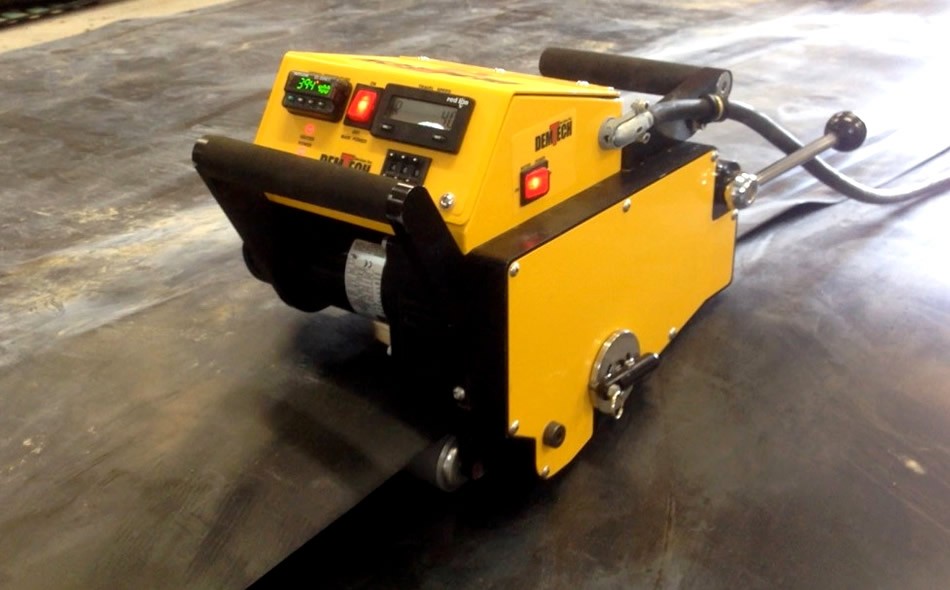
Split hot-wedge fusion welding, commonly referred to as wedge welding, is the primary method for welding geomembranes. It uses a fully automated device comprising a heated copper wedge, pressure rollers and electronic controls. The copper wedge is controlled and constantly monitored by a welding technician who adjusts temperature and drive speed throughout the seam.
The copper wedge creates a double-track weld along the length of the overlapping sheets, leaving a void between the two tracks. Once the seam is complete, both ends of the void are sealed and air is pumped in until it reaches 2.5 bar. The pressure is then monitored and must hold without dropping more than 10% over five minutes. Any failure in the weld is located by identifying where air is seeping and repaired before retesting.
Extrusion welding
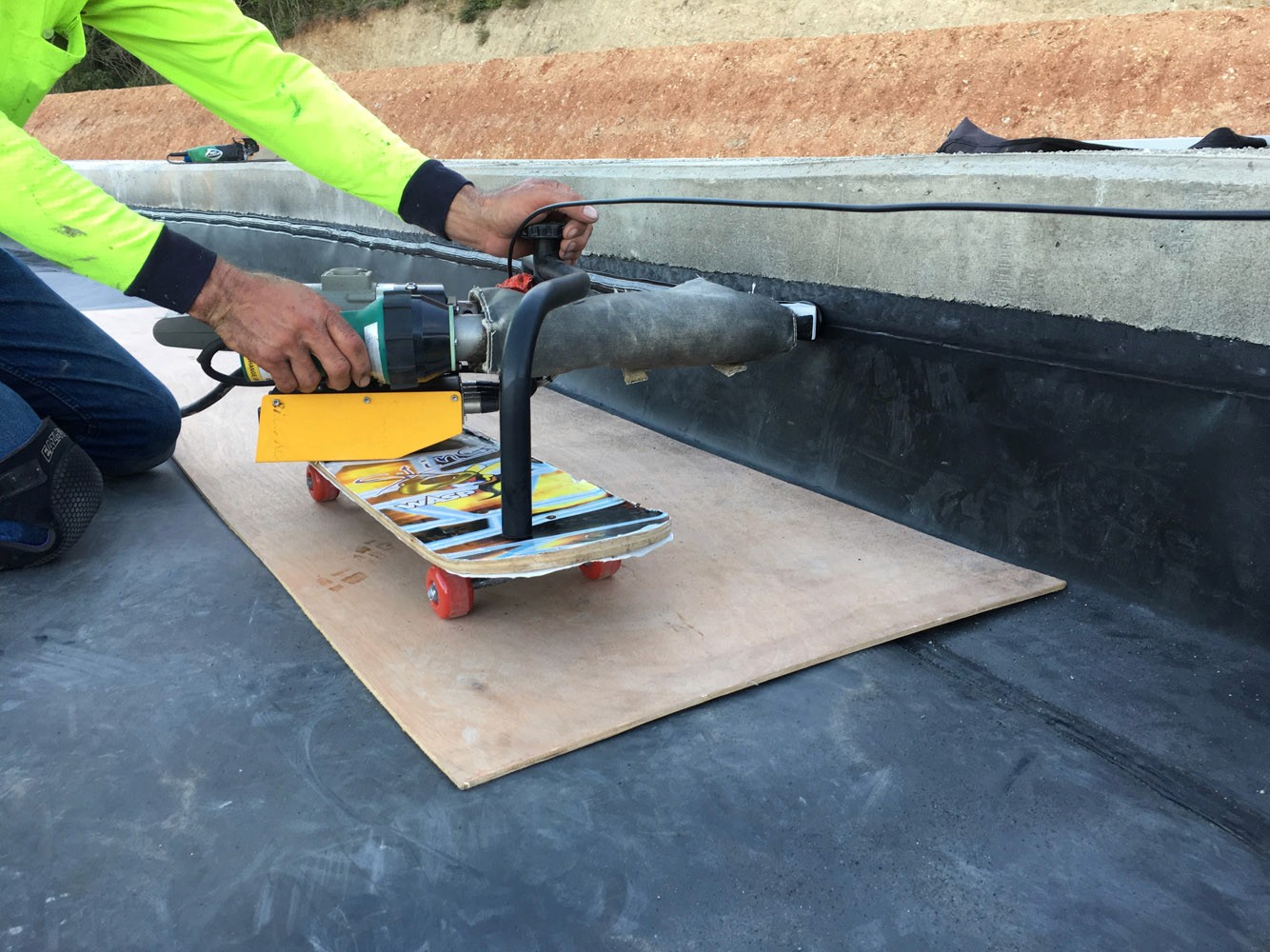
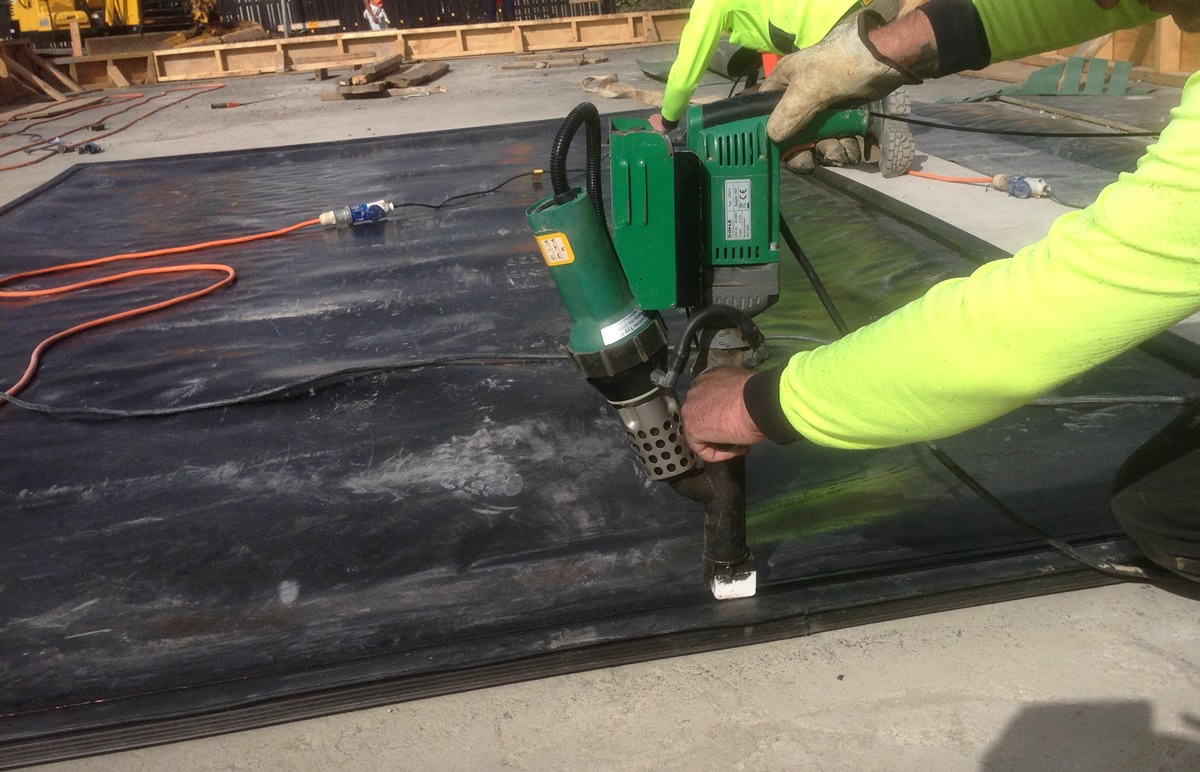
Extrusion welding uses a surface extrusion hand welder. The unit is semi-automated and equipped with electronic controls that constantly monitor both preheat and HDPE extrudate outputs. It pre-heats the sheet surface just prior to casting HDPE extrudate over the upper and lower section of the weld zone.
Testing for extrusion welds involves attaching a copper wire to the weld zone before welding begins. Once the weld is complete, a high-voltage spark tester is run over the seam. Any void in the weld causes a visible spark at that point, identifying exactly where a repair is needed.
Extrusion welding is used for all repairs and detail work where fusion welding is not practical, including penetrations through the liner and connections to Polylock at concrete interfaces.
Welder calibration
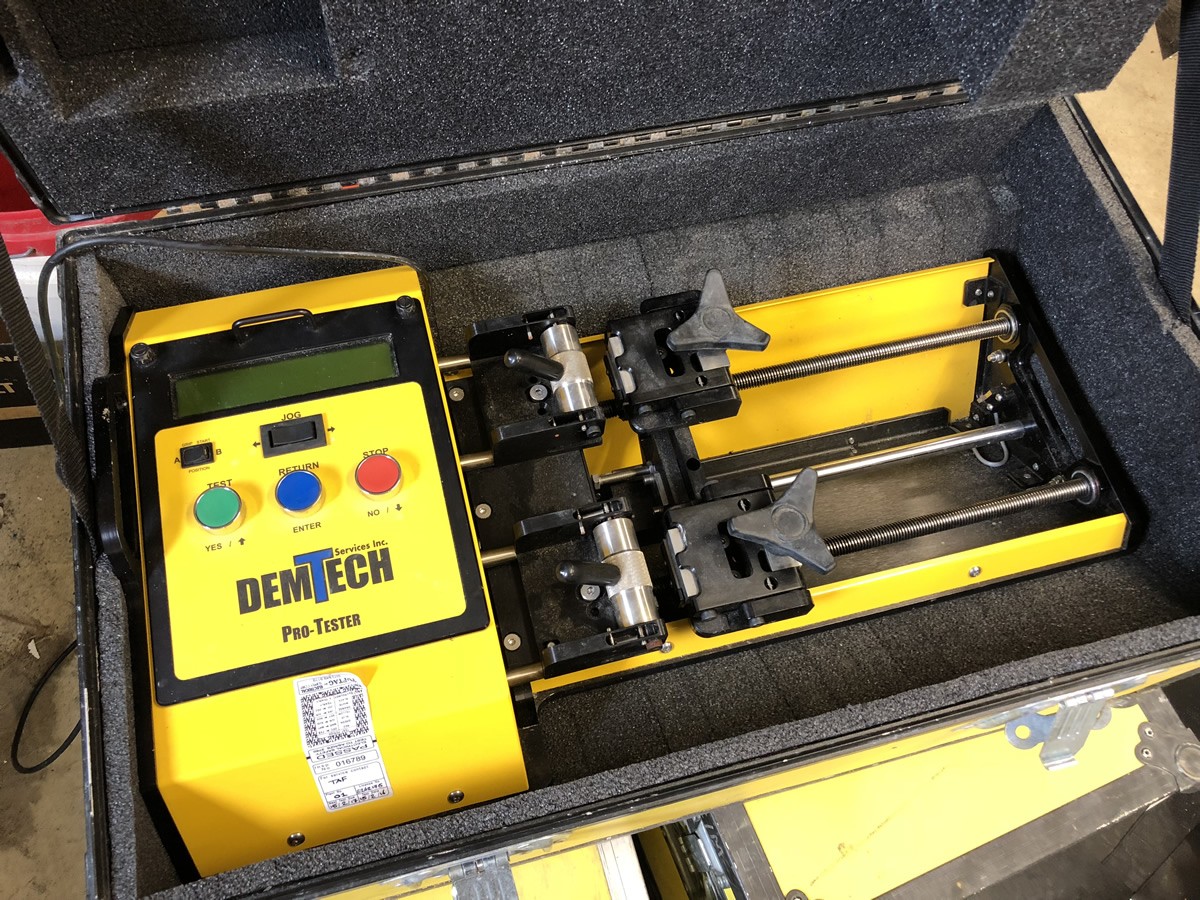
In addition to testing each completed seam, both wedge and extrusion welders are calibrated at the start of every working day. A test weld is carried out on a fragment piece of membrane, and a sample is cut from it and pulled apart on a calibrated tensiometer. The result is recorded in Newtons and must pass the minimum weld strength threshold set out in the liner specification. No field welding begins until the calibration sample has passed.